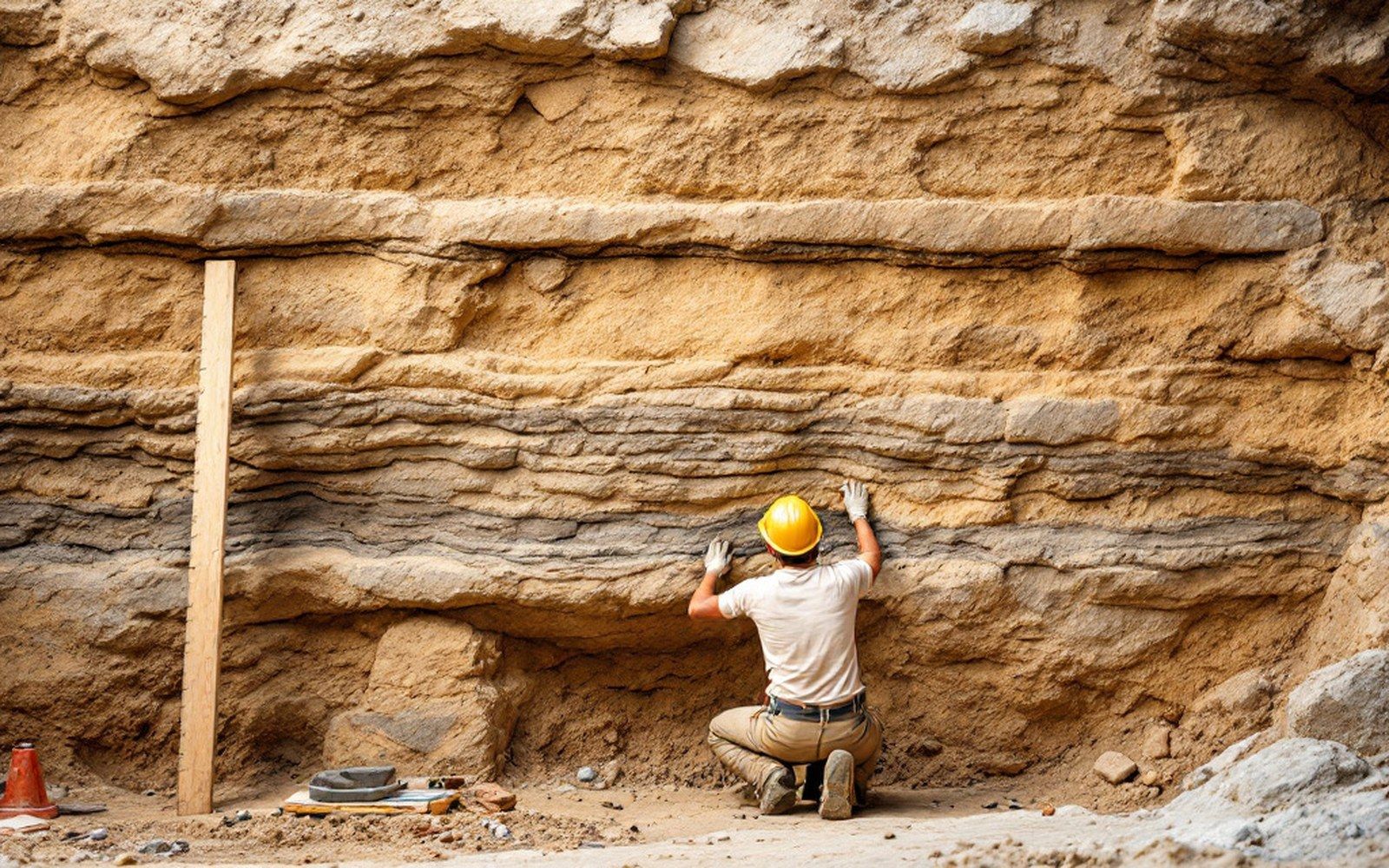
Stratigraphy
Depth is time
The principle the whole discipline rests on: what is lower was deposited earlier, unless something disturbed it.
The Meuse valley caves, and how the deep past is actually read.
Section I · The Caves · Entry 01
Schmerling excavated a fossil skull here in 1829 that was the first Neanderthal ever found, three decades before the Neander valley named the species and a century before anyone recognised what it was.
A cave floor builds from the bottom up, so the order of the layers is the order of events. A find recorded with its layer sits in a sequence that can be argued about; a find without one is a shape in a drawer.
Read the entry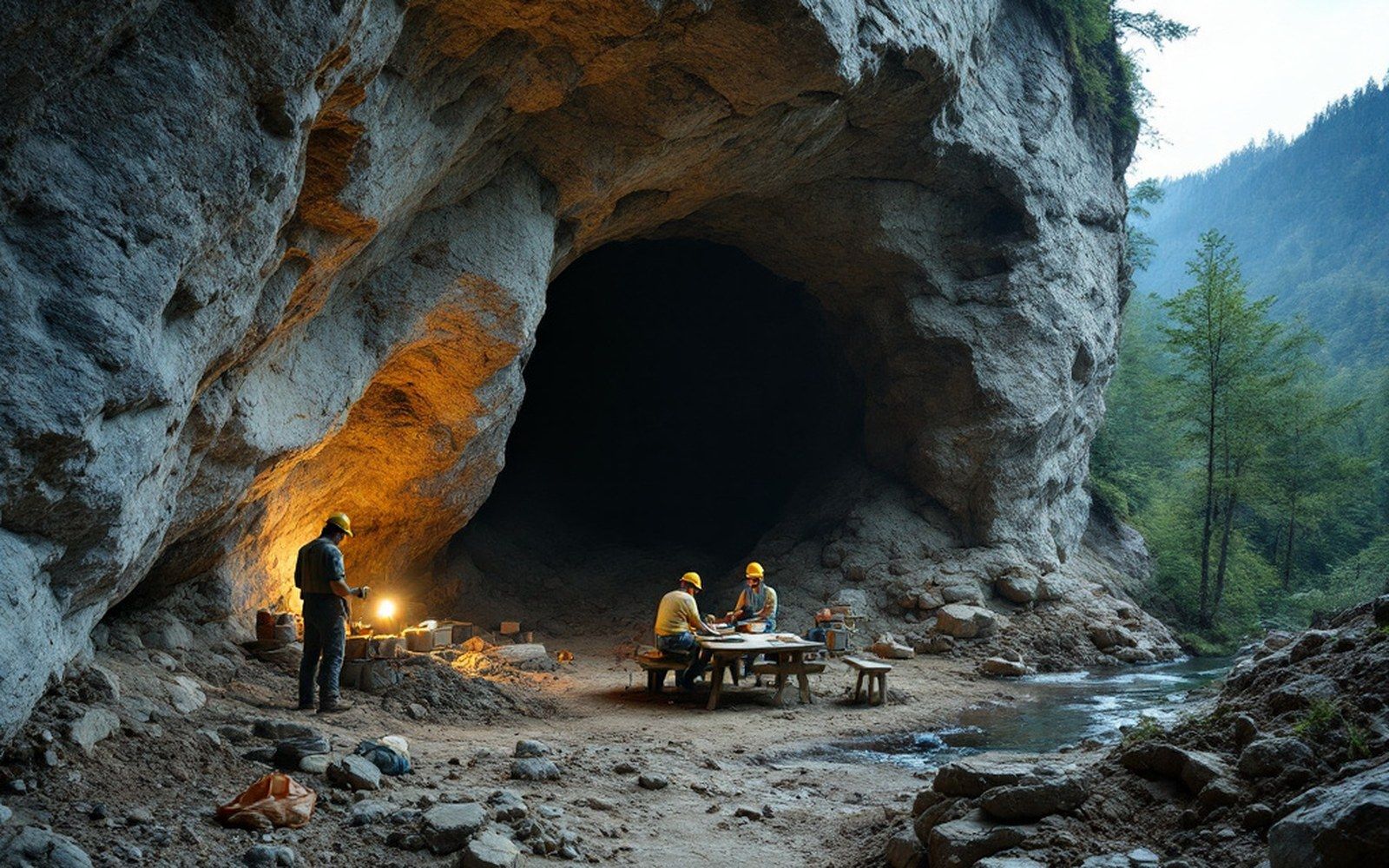
Six sections
Twenty entries
Depth is time, and someone has to write it down.
Each band differs in colour, grain and content. The boundaries record what happened to the cave: a roof fall, a wet phase, an interval with nobody in it.
The numbering here is schematic. Where a real sequence is described on this site, the layer numbers are the ones the excavators used.
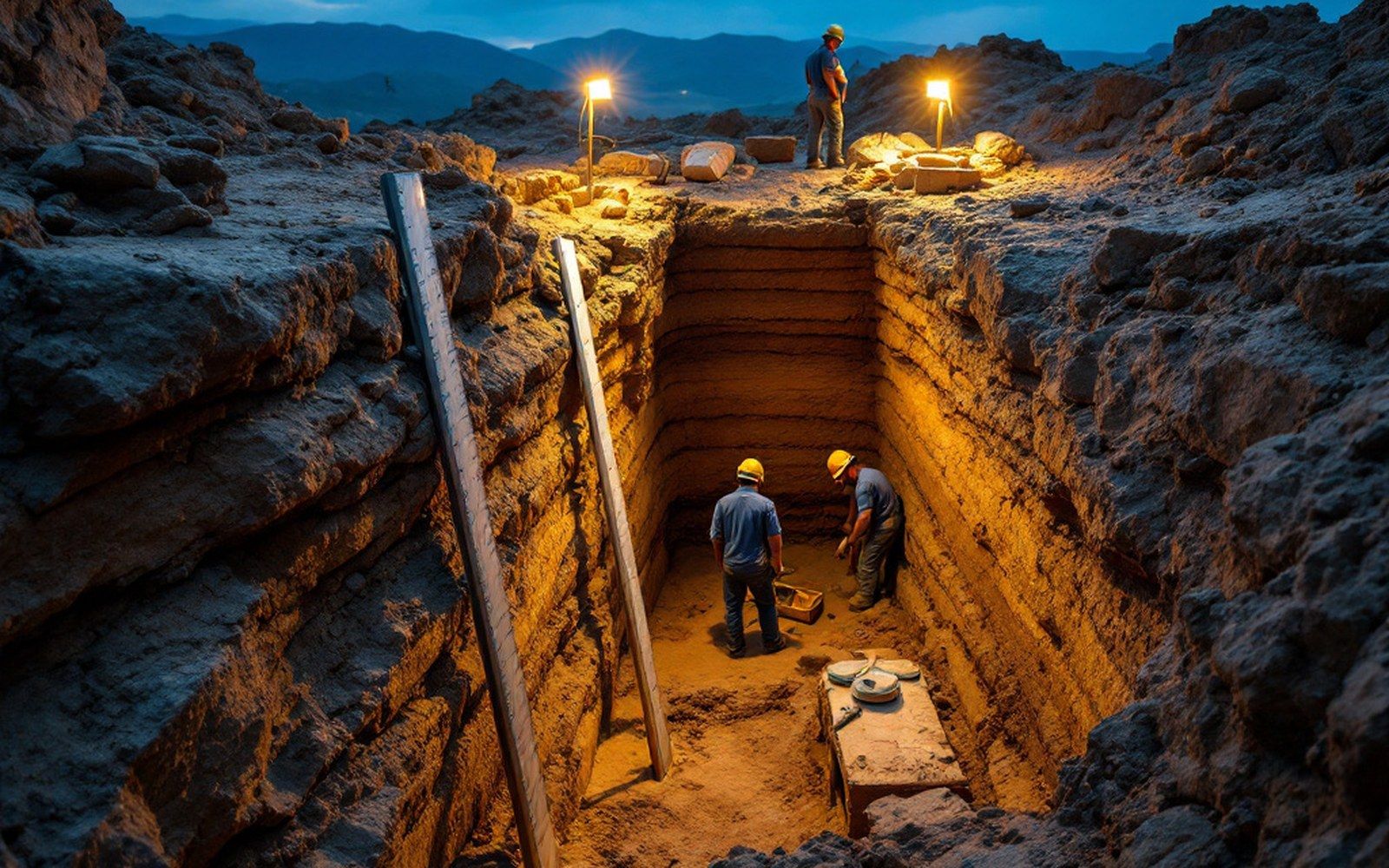
Stratigraphy
The principle the whole discipline rests on: what is lower was deposited earlier, unless something disturbed it.
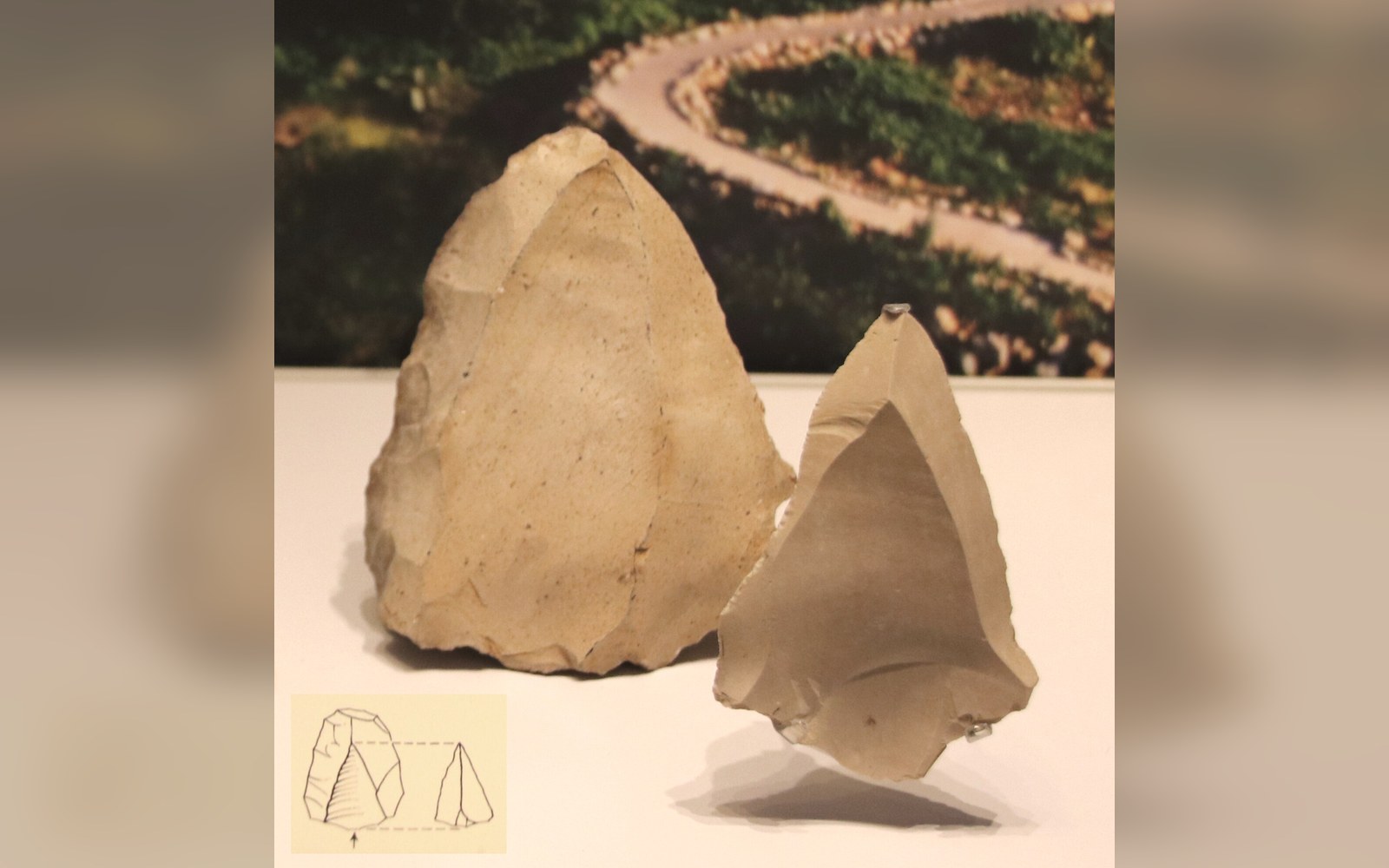
The Flint
The core is shaped first and the flake is struck last, which means the toolmaker had the finished shape in mind before the first blow.

The Finds
Excavated in 1829 and not recognised for a century — the record shows the evidence arriving long before anyone had a category to put it in.
The caves sit along a sixty-kilometre reach of the Meuse and its tributaries, between Charleroi and Liège in the Belgian provinces of Liège and Namur.
The difference between them is not what they found. It is how much of the context they wrote down — which is why material from 1886 can still be re-associated and material from 1829 cannot.