Section I · The Caves · Entry 05
Chaleux
One of Édouard Dupont's Lesse valley clearances — fast, productive, and just careful enough to matter.
One of Dupont's Lesse valley caves, dug fast and in quantity.
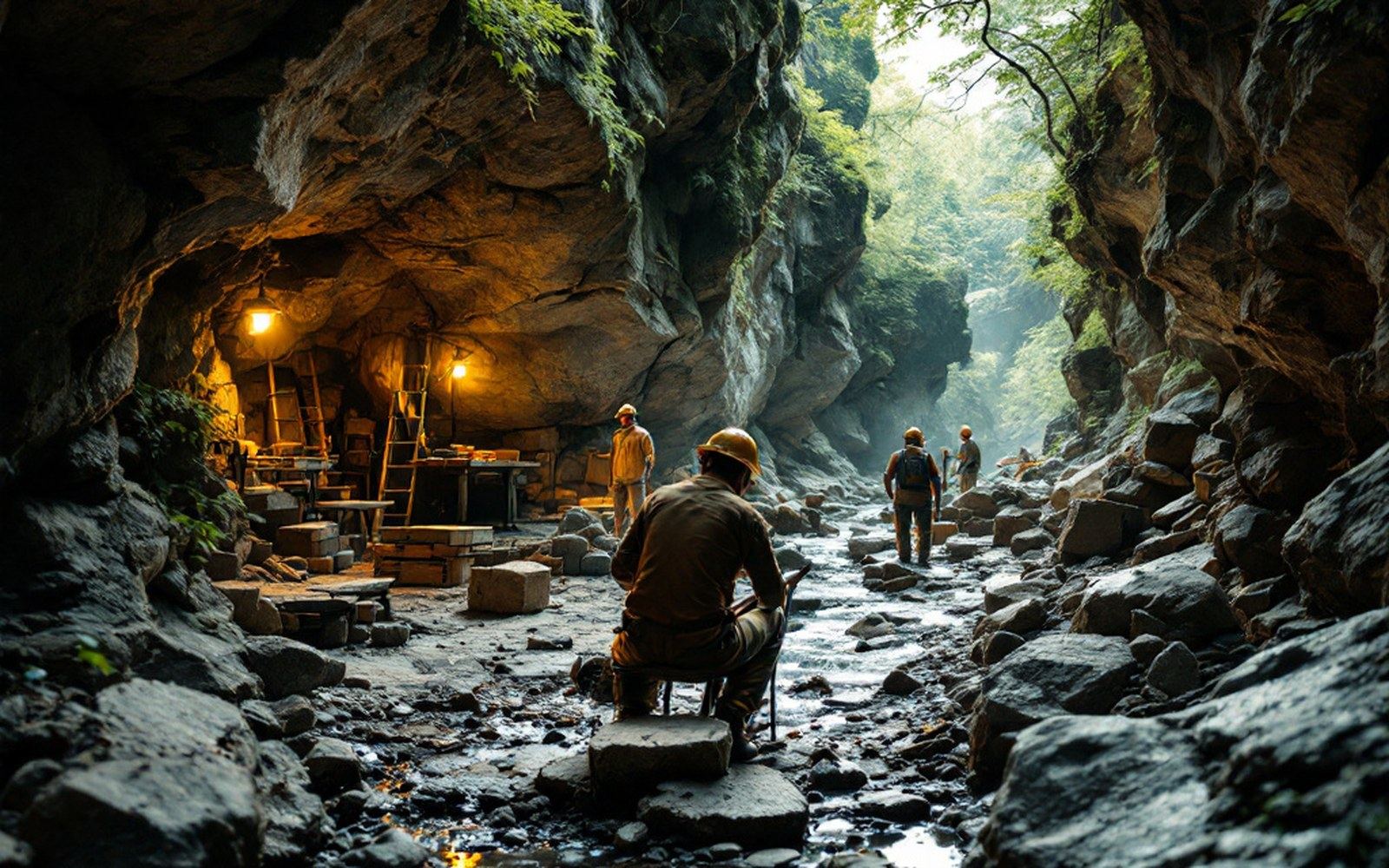
01A cave dug on Dupont's terms
The cave of Chaleux opens in the limestone cliffs above the Lesse at Hulsonniaux, in the commune of Houyet, Namur province. Dupont reached it in 1865, during the same sustained campaign that swept through Goyet, the Trou de Frontal, and a dozen other Lesse valley shelters in a few concentrated seasons. He was working for what would become the Institut royal des Sciences naturelles de Belgique ↗, and he was working fast.
Fast did not mean entirely blind. Dupont distinguished a succession of layers — cave loam above, an older coarser fill below — and he noted which fauna and which tools came from which level. The upper deposits yielded reindeer bone, carved antler and finely worked flint characteristic of the Upper Palaeolithic; the lower sediments produced a different, heavier flint industry with affinities to the Mousterian. That separation, however roughly observed, is the reason Chaleux still features in regional syntheses rather than footnotes.
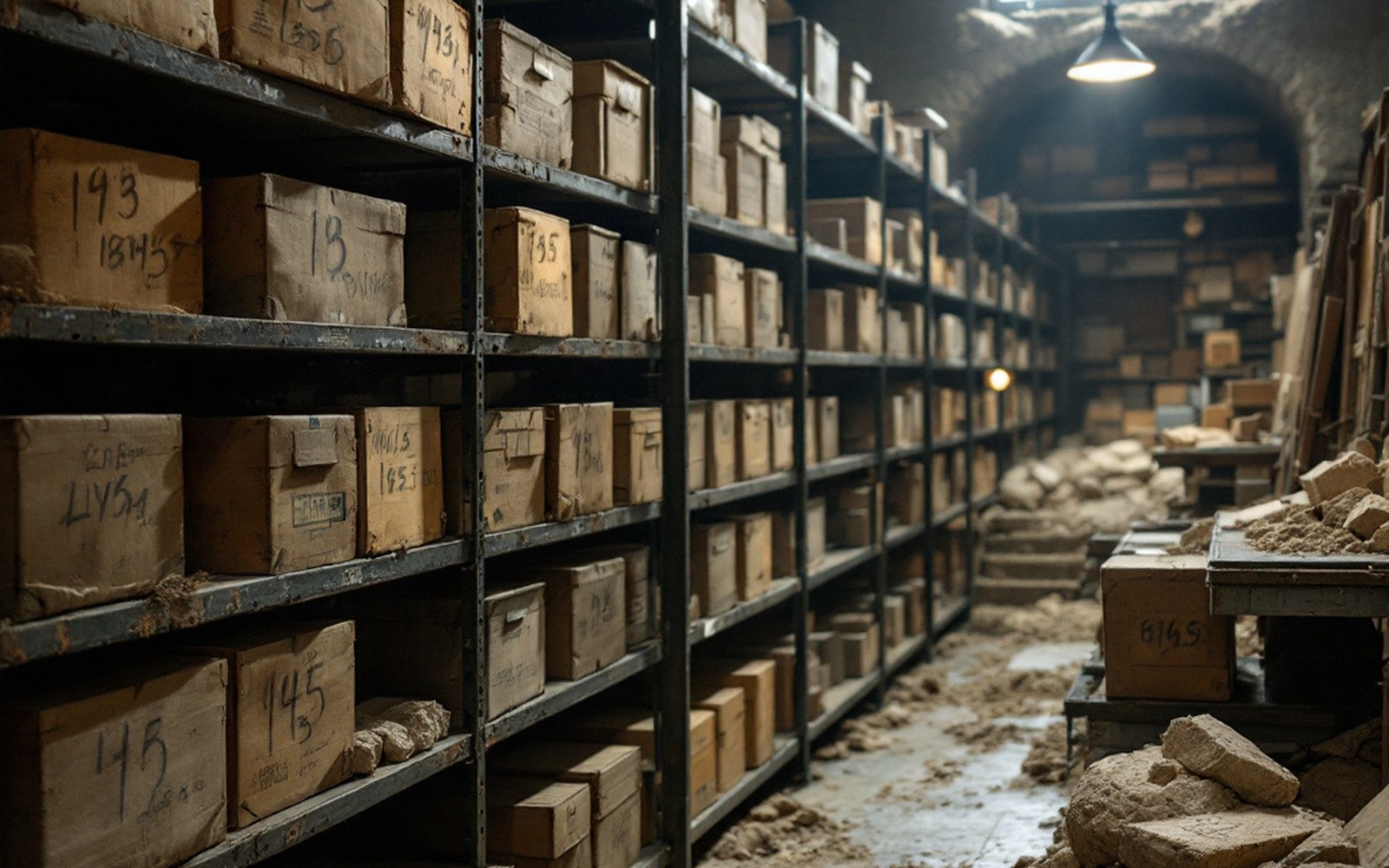
The artefact yield was large. Among the worked bone was a fragment bearing an engraved horse — one of the earliest examples of portable art recovered in the Meuse basin at the time of excavation. Dupont published the results promptly, which was more than many of his contemporaries managed, even if his field notes could not support the stratigraphic precision later excavators expected.
The limits are real and documented. Nineteenth-century clearance at the pace Dupont maintained could not isolate individual occupation surfaces, and the spatial relationships between objects within a layer were rarely recorded. What survives is a summary stratigraphy, a large faunal list and a significant lithic and bone assemblage, now largely held by the Institut royal. Later researchers, working from those collections, have applied radiocarbon dating ↗ to organic material from Chaleux to sharpen the chronology Dupont could only sketch in relative terms.
Chronological sequence
- Upper depositsUpper Palaeolithic, reindeer-period fauna, carved antler, fine blade tools
- Lower depositsheavier Mousterian-related flint industry, older coarser fill
- Absolute datesderived retrospectively from radiocarbon applied to archived organic material
Chaleux is, in this way, a case study in what nineteenth-century excavation could and could not do: enough stratigraphic awareness to establish sequence, not enough to answer the questions that sequence eventually prompted.
Read next