Section V · The Excavators · Entry 02
Édouard Dupont
The geologist who cleared the Lesse valley caves — fast, thoroughly, and with his eye on the national collection
He cleared cave after cave in the Lesse valley from the 1860s, at speed and in quantity, for a national collection.
01The man and his method
Édouard Dupont was a geologist, not an archaeologist, and that distinction shapes everything about what he left behind. Born in 1841, he joined what is now the Royal Belgian Institute of Natural Sciences ↗ in Brussels in the 1860s and was quickly given a mandate that would have daunted a more cautious man: survey and excavate the cave deposits of the Meuse and Lesse valleys systematically, and secure the material for the national collection before quarrying operations consumed the sites. He worked at speed because the circumstances demanded it, and he worked at scale because that was the assignment.
Between roughly 1864 and 1872, Dupont moved through the Lesse valley with a team of workmen, opening site after site. His list includes Trou du Frontal, Trou de Chaleux at Hulsonniaux, Trou des Nutons at Furfooz and Trou Magrite at Pont-à-Lesse — each named, each dug, each documented in the reports he submitted to the Institut royal des Sciences naturelles de Belgique. He published his findings in several volumes, most consequentially Les temps préhistoriques en Belgique (1872), which laid out the stratigraphy and the finds together and gave Belgian cave archaeology its first coherent synthesis.
02What he recorded and what he missed
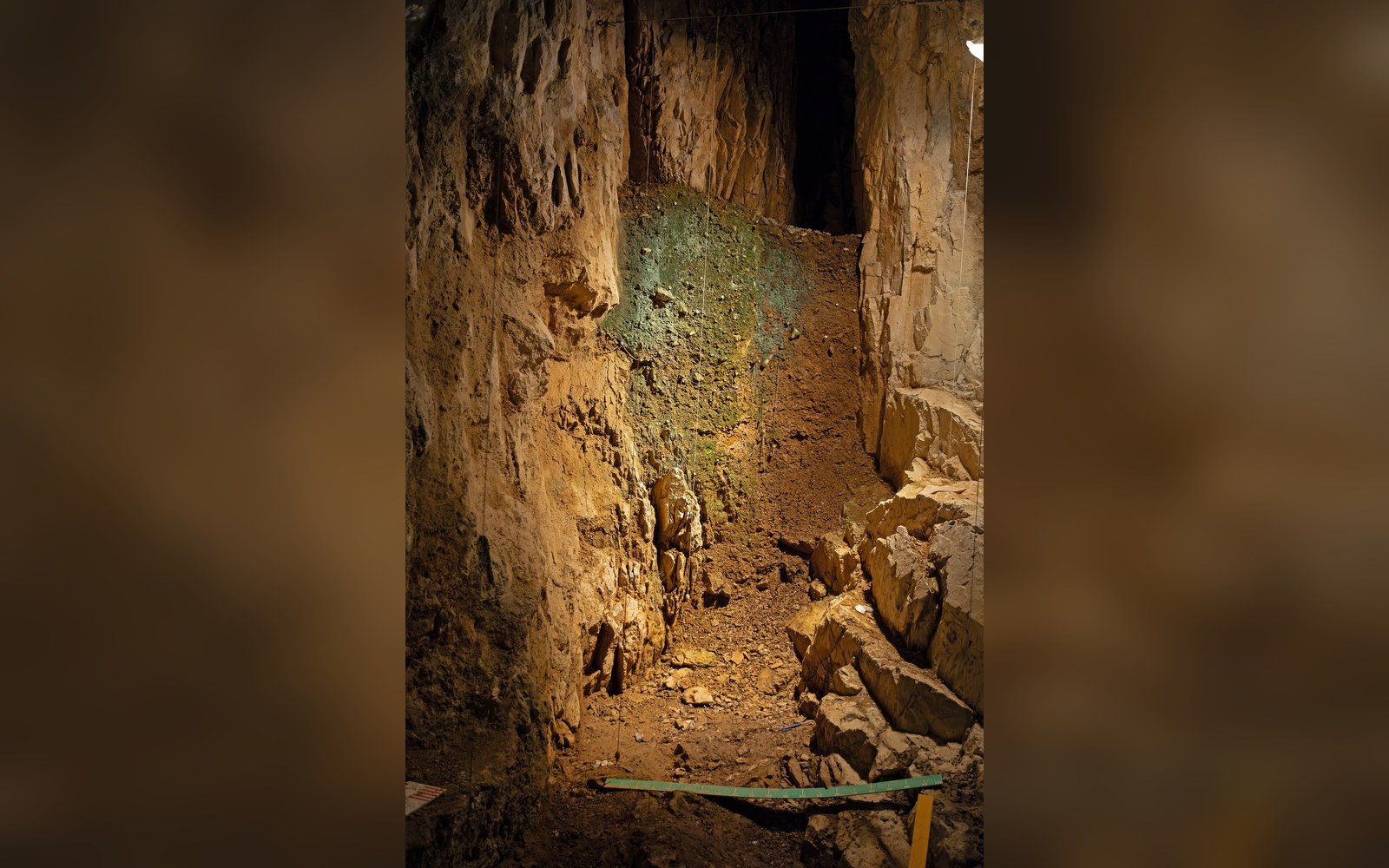
Dupont understood stratigraphy in the geological sense: he read the layers, distinguished cave loam from roof-fall, and correlated deposits across sites well enough to identify recurring assemblage types. He separated what he called the Mammoth period from the Reindeer period on faunal grounds — a distinction that broadly maps onto the Middle and Upper Palaeolithic ↗ — and he did so by attending carefully to which animal bones came from which level. For a man working in the 1860s, that is a real achievement.
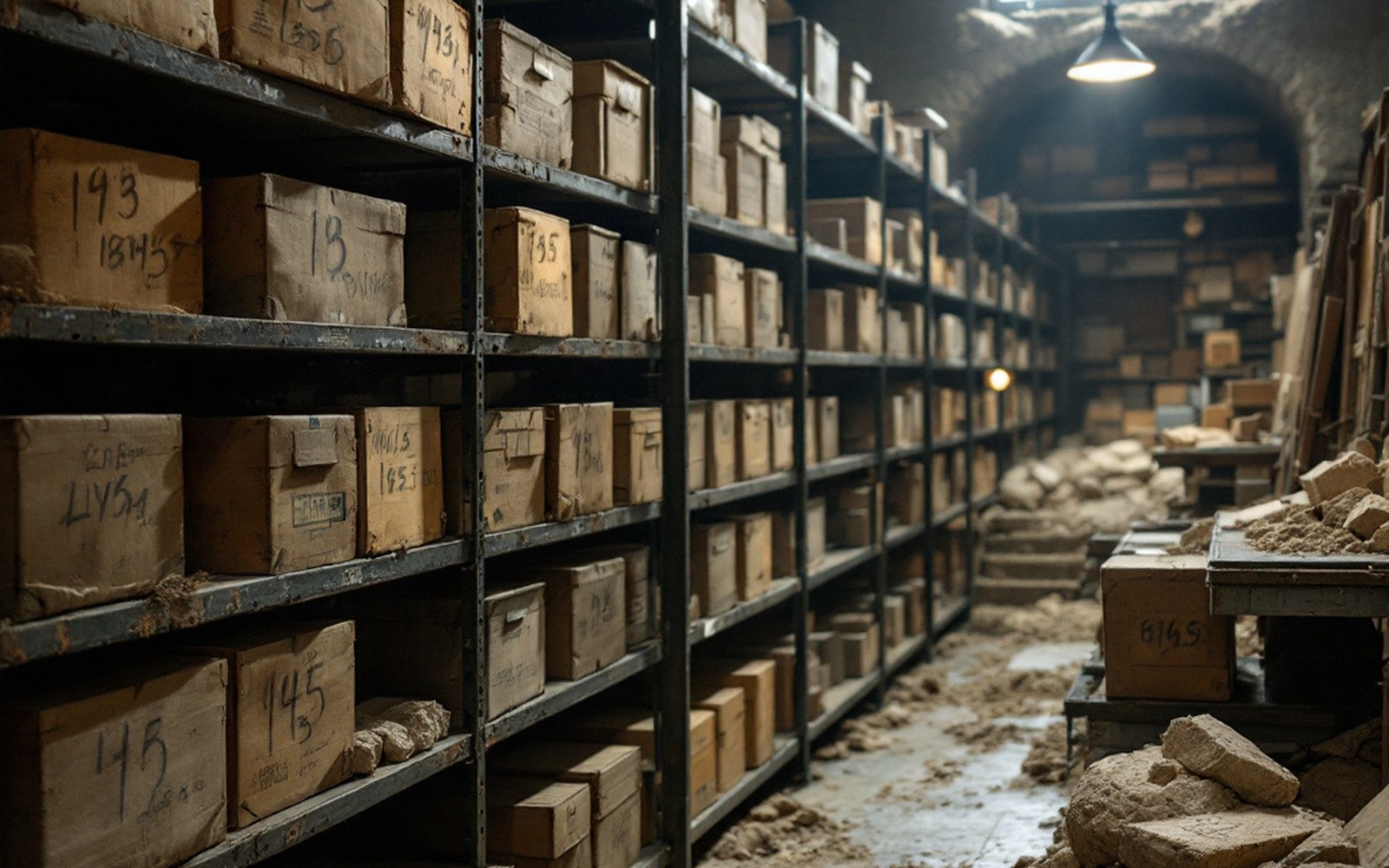
What he could not do, and to some extent did not try to do, was record individual find positions within a layer. His workmen moved sediment, and the objects went into trays and then into crates. Precise horizontal coordinates were not part of the practice; the layer was the unit of record, not the point within it. At Chaleux, where he recovered thousands of worked flints and engraved objects, the sheer quantity of material was the point. The cave filled a national collection; it did not produce a plan that a later excavator could interrogate.
Chronology
- 1841Dupont born
- c. 1864–1872Main phase of Lesse valley cave excavations
- 1872Les temps préhistoriques en Belgique published
- 1886Spy excavation (De Puydt and Lohest) sets a new documentation standard
- 1911Dupont dies; Ramioul cave discovered the same year
- Post-1970s onwardRadiocarbon dating revisits his stratigraphic sequence
This matters because the nineteenth century's other great Belgian excavation — Spy in 1886, dug by Marcel De Puydt and Max Lohest — showed what was possible when the grid was applied consistently and every find was tied to a specific locus before it was lifted. Dupont's earlier practice looks coarser by comparison, though it was not unusual for its decade.
What he could not do, and to some extent did not try to do, was record individual find positions within a layer.
03What his work established
The damage done by speed and volume should not obscure the genuine record Dupont built. He demonstrated beyond reasonable dispute that humans and extinct megafauna had coexisted in these valleys: the same cave loam that yielded Mousterian flints — the side-scrapers and points associated with Neanderthals — also yielded mammoth, woolly rhinoceros and cave bear. That was not obvious to everyone in the 1860s, and the Belgian material, assembled at scale and presented in a systematic publication, contributed to making it undeniable.
His collections at the Royal Belgian Institute of Natural Sciences remain large and, in parts, still productive. Radiocarbon dating applied decades after his death has confirmed, complicated and occasionally overturned his stratigraphic interpretations, but it has also validated the broad sequence he proposed. The fauna he sorted by eye has held up better than the attribution of individual tools, where the absence of point-by-point provenance leaves room for ambiguity that no later technique can fully resolve.
Sites he dug
Dupont died in 1911, the same year a local society found the cave at Ramioul on the Meuse — a site he never worked but that would repeat, in miniature, the same pattern of urgent excavation in limestone country under pressure from industry. The urgency that drove his campaigns never really went away.
Read next