Section II · Stratigraphy · Entry 03
Modern Disturbance
Quarrying, earlier digging and animal burrowing all move material, and reading a section means spotting where that happened.
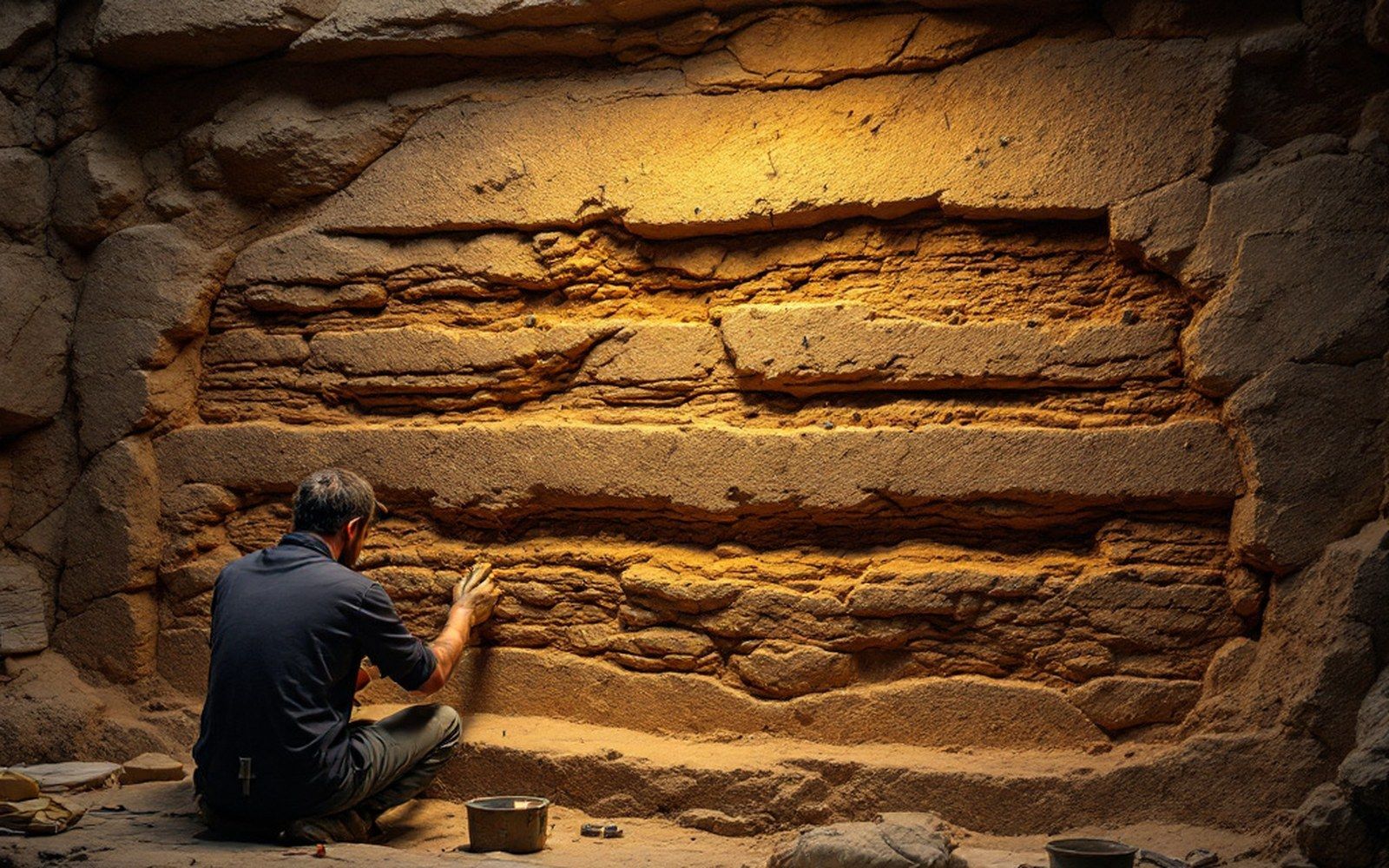
01When the Layer Lies
Reading a sediment section in a Meuse cave is never simply a matter of running your eye down the profile and counting the layers from youngest to oldest. Every section carries a record of disruption alongside its record of deposition — and the job of the excavator is to distinguish one from the other.
Quarrying is the most dramatic agent. The limestone country of the Meuse and Lesse valleys has been commercially quarried since the nineteenth century, and the blasting that opened new faces regularly destroyed cave fills outright or shattered them beyond reading. At Ramioul, in the limestone country near Flémalle, Liège, quarry activity had already consumed part of the site before the Chercheurs de la Wallonie began systematic work after 1911. What survived was a remnant, and interpreting it meant accepting that large portions of the original sequence were simply gone.
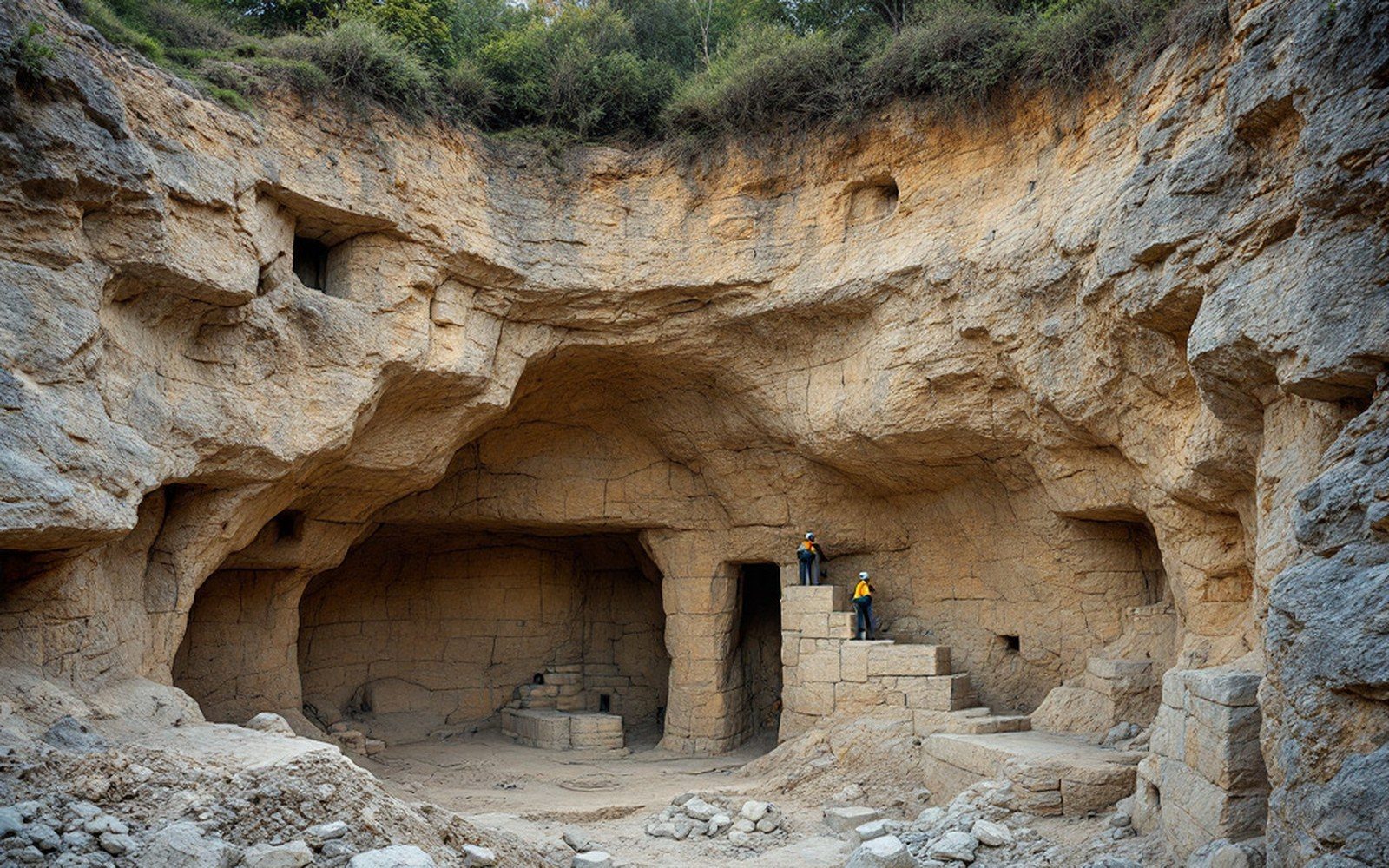
Earlier excavation is nearly as destructive, and harder to detect, because it leaves voids that later fill with slumped sediment. When Édouard Dupont moved through Chaleux and the other Lesse valley caves in the 1860s at speed and in quantity, he left disturbed spoil, emptied chambers and refilled trenches. Subsequent excavators reopening the same sites encountered mixed layers that looked, in profile, like primary stratigraphy. Only close attention to the matrix — loose sediment dumped rather than deposited, abrupt colour changes without any depositional logic, finds from different technological periods sitting at the same elevation — revealed the problem.
Animal burrowing is subtler still. Badgers, foxes and rodents move through cave fills constantly, carrying objects ↗ downward and sideways as they tunnel. A flint tool recovered from what appears to be a Mousterian layer may have been displaced centimetres or tens of centimetres from its original position by an animal that denned in the site millennia after the humans left. Faunal remains are similarly mobile: gnawed bone can travel a long way from where the carcass was processed.
Disturbance agents mentioned
The recognition of these agents has sharpened considerably since the nineteenth century. Modern excavations record not only the depth and layer of each find but also its orientation, inclination and spatial relationship to surrounding objects. A flint whose long axis is oriented with the slope, or a bone lying in a channel of darker, intrusive sediment, is already a candidate for displacement. Radiocarbon ↗ dates that contradict the stratigraphic order — younger material lower, older material higher — are often the first hard evidence that a section has been disturbed, and they oblige excavators to go back to the profile and find out where and how it happened.
Diagnostic signals of disturbance
Read next