Section I · The Caves · Entry 04
Trou Al'Wesse
A cave in Modave ↗, Liège, where modern excavation produced the kind of stratigraphic record that lets the region's older digs be measured against something solid.
A site worked by modern campaigns to modern standards, which is what makes it useful for checking the old ones.
01What the site established
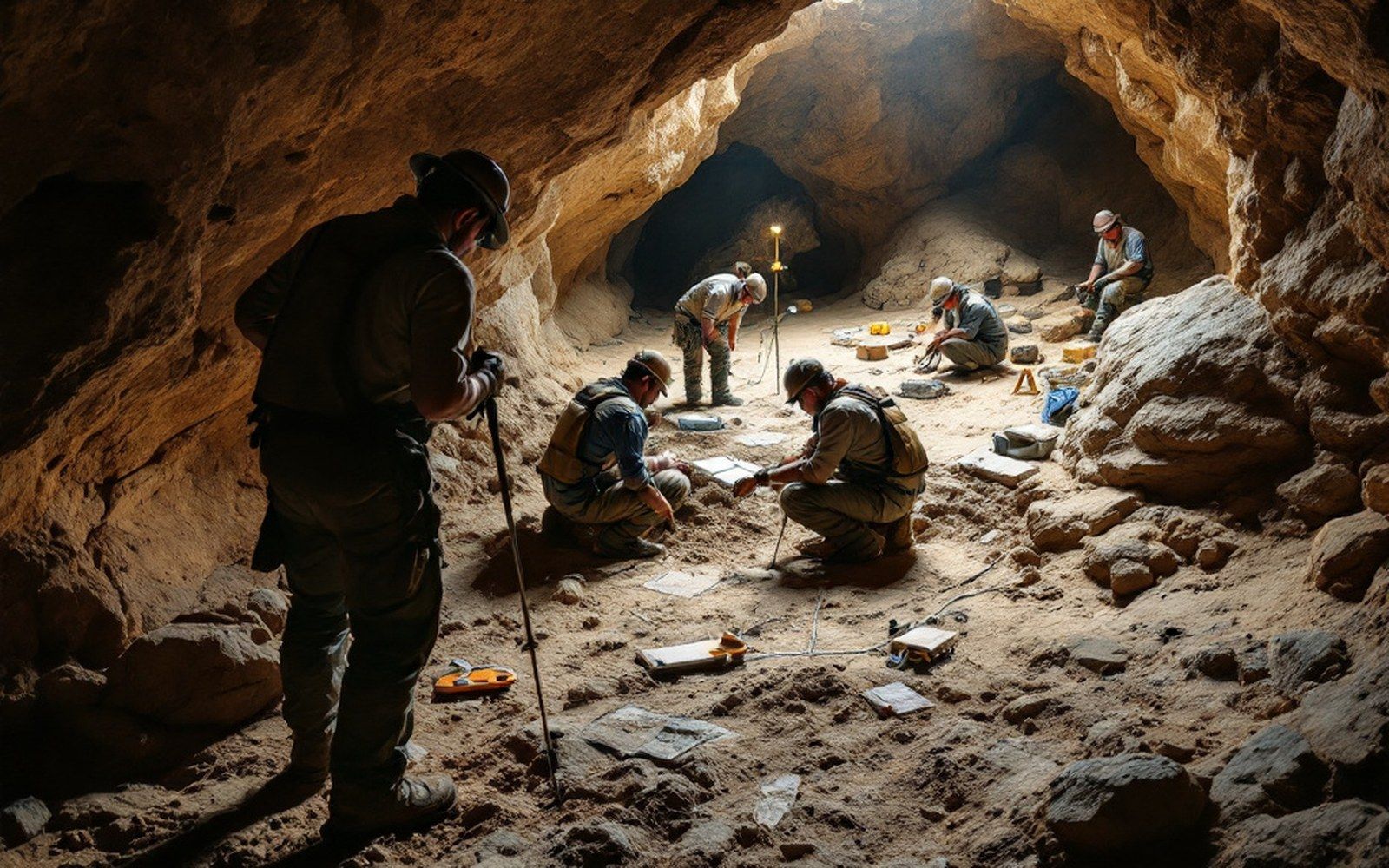
Trou Al'Wesse is a limestone rock-shelter and cave above the Hoyoux valley in Modave, Liège province. It has been excavated since the 1990s under the auspices of the University of Liège ↗, with campaigns that applied full modern protocol: recorded sections, sediment sampling, systematic sieving, and direct radiocarbon dating of diagnostic material.
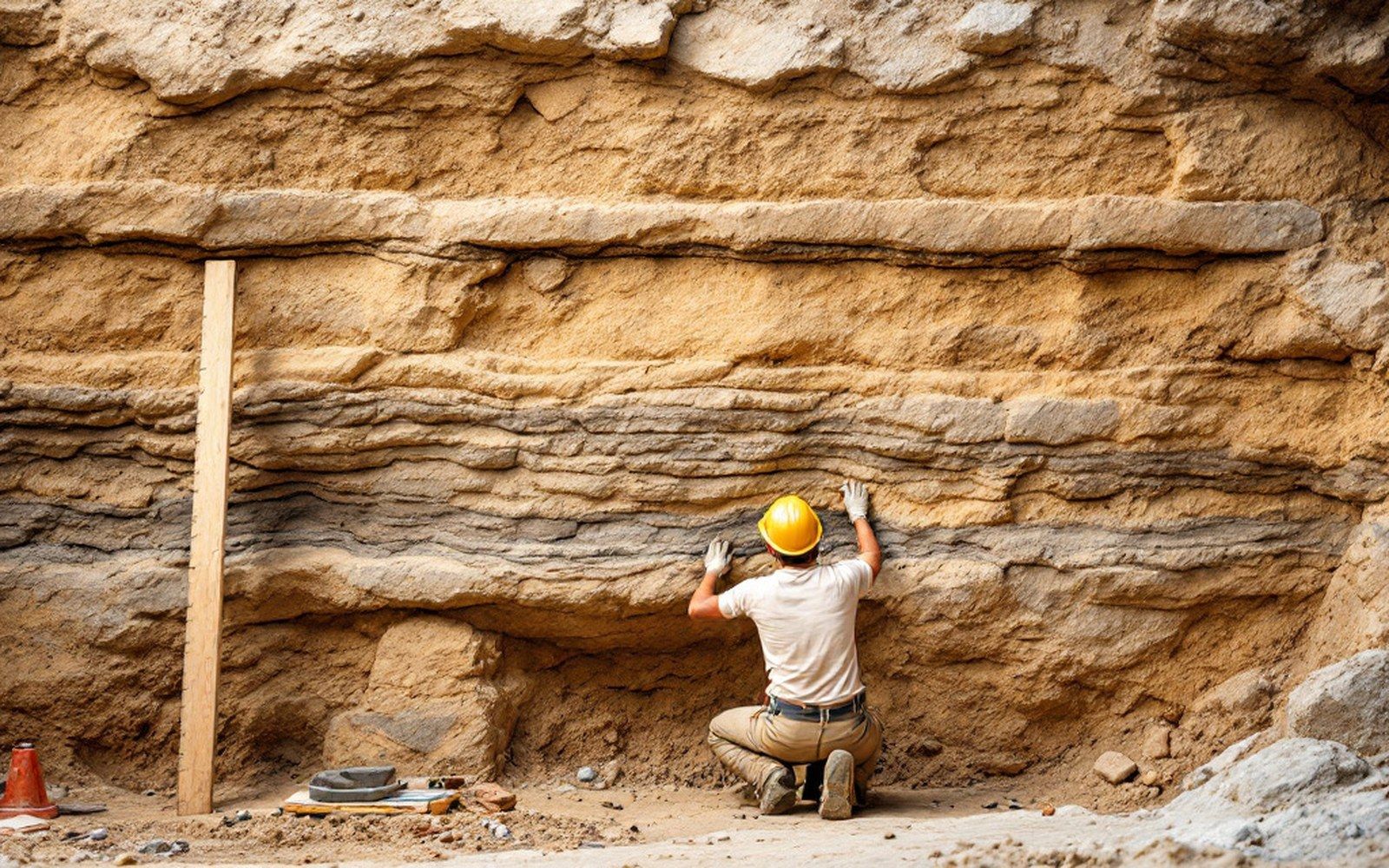
The stratigraphy runs from Mousterian levels at depth — containing Levallois flakes and discoidal cores — through transitional and Upper Palaeolithic occupations higher in the sequence. Each layer was documented horizontally as well as vertically, meaning that the spatial distribution of objects within a level was captured before anything was lifted. That is ordinary practice now; it was not what Édouard Dupont managed when he moved through Lesse valley caves at industrial pace in the 1860s, or what the first workers at Goyet recorded.
Because the excavation is recent, the dating framework at Trou Al'Wesse is built on AMS radiocarbon measurements rather than typological inference alone. The Mousterian deposits fall within the range expected for late Neanderthal occupation of the Meuse basin — broadly the earlier part of the last glacial — while the upper assemblages align with modern human presence after roughly 40,000 years ago. Those numbers are not fixed; ongoing study continues to refine individual phases, which is itself a normal part of how radiocarbon results accumulate on a site with complex sediment histories.
The site's particular value is comparative. When you want to ask whether the fauna from a nineteenth-century cave dig genuinely belonged to the layer it was pulled from, or whether the flint types Dupont assigned to particular deposits were correctly attributed, Trou Al'Wesse offers a reference sequence — one with documented context, dated organics and spatial records — against which claims from the older work can be tested. The question was never just what is here; it was always whether anyone could prove it.
Chronological anchor points
- Mousterian levelsbroadly earlier last glacial, Neanderthal occupation
- Upper Palaeolithicabove roughly 40,000 years ago, associated with modern humans
- Dating methodAMS radiocarbon, supplementing typological attribution
What makes it useful
Read next